Berlin Art Grant Clinic is established in 2014 as a support system for artists, curators, NGOs and creative minds from all fields to help them to equip themselves for a successful career in the art scene. Through its seminars, workshops and consultancy practices it fills the gap between the art schools and the professional life, and helps cultural actors to sustain their careers as well as their lives. The Clinic was established to address a persistent gap between art education and professional practice; particularly in relation to funding literacy, institutional navigation, and career sustainability.
Rather than approaching grant writing as a technical exercise, Berlin Art Grant Clinic works with applications as strategic documents: texts that translate artistic and cultural practice into institutional language without flattening intent, authorship, or complexity.
Over the past decade, the Clinic has coached more than 2,700 artists, curators, cultural managers, and designers, supporting many of them in securing public and private funding. Through its targeted Emergency Room format, designed for time-sensitive applications, the Clinic has achieved a documented success rate of 82%.
Today, as applications become increasingly standardized and AI-assisted, this focus on judgment, positioning, and institutional literacy has become more relevant than ever.
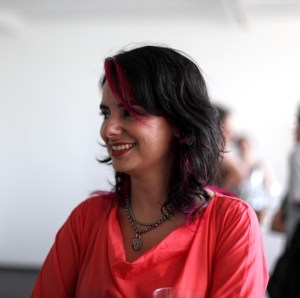
Ece Pazarbaşı is the ‘doctor’ and the founder of Berlin Art Grant Clinic. She works as an independent curator and is the founding director of Field Kitchen Academy, an interdisciplinary educational residency program. She has developed and taught the Clinic’s methodology continuously since 2014, drawing on long-term curatorial practice and extensive experience with funding bodies and international selection processes.
She has conducted grant-writing courses and seminars at institutions such as Aalto University, UdK Berlin, Weissensee Kunsthochschule, Transart Institute, Open University Helsinki, Kunsthochschule Mainz, and Kunsthochschule Kassel, as well as at international cultural and research platforms including IRCAM (Centre Pompidou / Ulysses Network), Institute of Electronic Music and Acoustics (IEM), University of Graz, and Magnum Photos (Magnum Education).
In addition, she has served and continues to serve as a jury member for major funding bodies, including European Commission art and culture programmes (three consecutive years), the Berlin Senate, Friedrichshain-Kreuzberg, and Apexart (New York).
Across all these contexts, her focus remains consistent: to support cultural practitioners in navigating institutional frameworks with clarity, confidence, and long-term sustainability.
Her curatorial experiences include Timebenders at Neue Nationalgalerie (2025); Cabinet of the Unknown at Werkbundarchiv – Museum der Dinge (2017); Bank Blank, the main exhibition of 48 hrs Neukölln (2018); Memory Plates within the frame of Festival of Future Nows at Hamburger Bahnhof (2017); Muscle Memory at Kunstraum Bethanien/Kreuzberg (2017); 12/12 and Turkish Art Nice and Simple at Tanas Berlin (2011–2012) together with René Block. She was the assistant curator of the 52nd Venice Biennial Turkish Pavilion (2007).
She worked with the New Museum – New York for Ideas City: Istanbul (2012) as project coordinator and in 2009–2010 served as Consultant and Program Specialist of Visual Arts for Turkey at the Strategic Planning and Development Department for the Abu Dhabi Authority for Culture and Heritage, UAE.
 Berlin Art Grant Clinic